
Rörö offers swimming opportunities almost everywhere – from shallow sandy bays to shiny granite cliffs that meet the open sea. Here, swimming is a natural part of everyday life. The sea is always close by, and thanks to the right of public access and beach protection, everyone can enjoy nature – as long as they show consideration: do not disturb, do not destroy.

East side – quiet and sheltered – peaceful
On the north-eastern side, there are several small, sheltered bays with calm waters.
If you follow the blue trail from Labyrinten towards the northeast and Tåängen, you will arrive at Tåt, where you will find the third barbecue area. Here, you can enjoy swimming in the shallow waters of the bay or deeper waters further out on the rocks. It is also one of the few places where larger boats can moor, as there is ample depth under the keel.
On the eastern side is the municipal bathing area Gule Skära, with a jetty, raft, changing room, lifebuoy and toilet. Here, the water is often calmer and more sheltered – perfect for families with children or for those who want to take a safe dip, and the crabs thrive under the pier.

A little further south, to the south-east, between Håla Berget and Långholmen, there is a cove with a lovely soft sandy bottom that can be reached from the cliffs. It is a popular spot with both islanders and day-trippers on sunny days.


Hamnholmen mainly attracts young people; there are no beaches here, just cliffs. On the southern side there is a fine sandy seabed that drops steeply into the depths.
Hamnholmen is not particularly accessible, and the water can be deep, but for those who enjoy swimming, Hamnholmen is a must-visit destination on hot summer days.
Southwest side – the bays at the harbour
Just beyond the harbour, the well-known bays stretch out – First Bay, Second Bay, Third Bay, Fourth Bay and Ers Bay.
There is plenty of space here for sunbathing, swimming and picnics, and each bay has its own character – from small sandy beaches to cliffs with sweeping views to the west.
The first bay is located by the guest harbour and has the finest sand on the island.
The beach is shallow and child-friendly, with toilets, fresh water, a kiosk and everything else you would expect to find at a harbour nearby.
The second cove is the smallest – here you may have to step over a few rocks to reach the sandy bottom. It sometimes feels more like a passage between the first and third coves, past the cliff wall and towards the blackberry bushes.

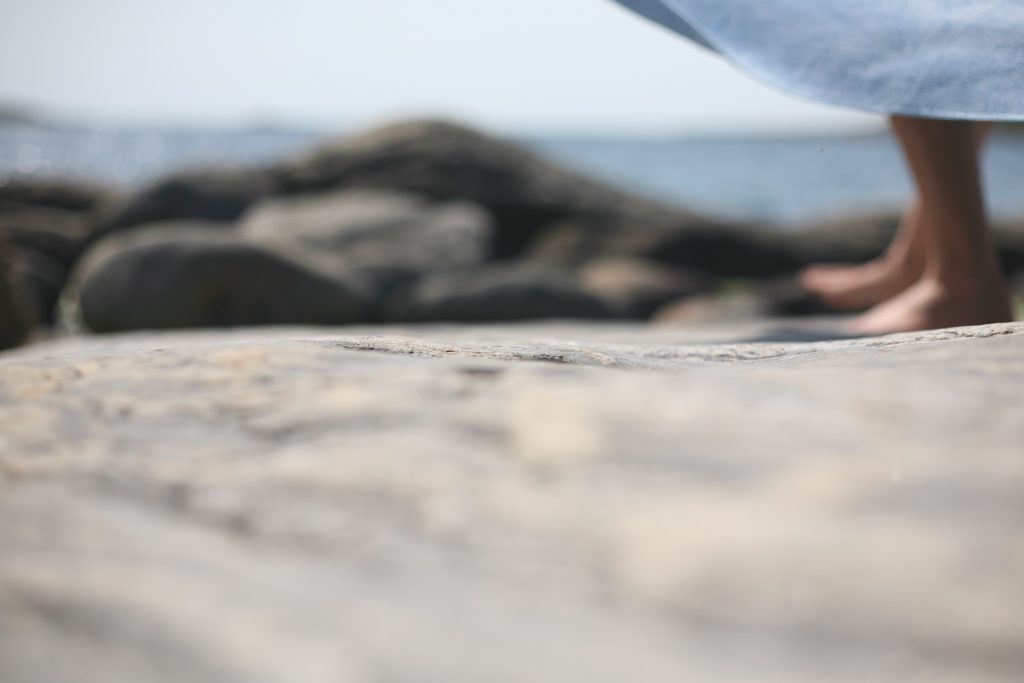

Third bay – people rarely swim here nowadays, but in the past it was used for swimming lessons, among other things. There is hardly any sandy beach to speak of, so you have to swim from the cliffs. The sandy bottom, on the other hand, is usually nice and free of debris.
The fourth bay consists of two smaller coves, where the sand meets the cliffs in gentle curves.
Here, beach grass grows tall on some of the island’s few sandbanks and looks out towards the sea.
The fourth bay also has one of the island’s designated barbecue areas. There are three such areas in the nature reserve, specifically to protect the natural environment. Fires are only permitted in these areas.
Ers vik is both the longest and shallowest beach on Rörö.
Boat guests often moor here on warm days. The bay is sheltered from the west wind, opens up to the south and is close to waste disposal and toilets. Behind the beach cabbage, on the sandbank outside the fence, a project is underway to plant rare species – marked with signs and stakes.


The west side – cliffs, wind and waves
Along the west side, the rocky beaches continue at regular intervals. Here you can find your own sheltered spot – or let the wind cool you down on a hot day. The second barbecue area is located between Erskullar and Röe hall. It is sheltered between a large rock and the mountain. If you end up at the oyster plant, you have gone too far – turn south and you will find it.
The pebbles along the west side sometimes offer swimming opportunities when the water is calm. But when the wind picks up, only wave surfers venture out here. The islanders know better, preferring to stay on land and watch the waves crash.
If you follow the coast northwards, past Kelly’s Bar, you will eventually reach Sandviken – a sheltered bay where the Labyrinth is hidden among beach roses. The name Sandviken comes from the sandy seabed a short distance out, most clearly visible from above. Here you will also find giant’s kettles, carved out of rock by the sea over thousands of years.
Right of public access, jetties and coastal protection
Swimming from cliffs and beaches is permitted almost everywhere, but always show consideration for nature and wildlife.
The same consideration applies to peirs. Many peirs are used by residents and their boats, but as a rule, you can swim for short periods even from private peirs – as long as you do not disturb anyone, litter or prevent the owners from using them. However, peirs located close to houses or clearly marked as private should be left alone.
One of the main reasons why everyone can enjoy the sea around Rörö is the coastal protection scheme – a scheme that ensures the coast remains open and accessible to all. The coastal protection scheme not only protects plants and animals, but also guarantees that people can continue to move freely along the water’s edge. It is thanks to this that Rörö still feels natural, unspoilt and welcoming – even as the island grows and changes.

The right of public access and coastal protection are essentially about the same thing: freedom with responsibility.
On Rörö, the sea belongs to everyone, and when we show consideration for both people and nature, we can continue to swim, hike and live close to the sea – just as freely as we always have, with the freedom to always be able to reach the sea.
